

If Execution Keeps Breaking, You May Be Solving the Wrong Problem
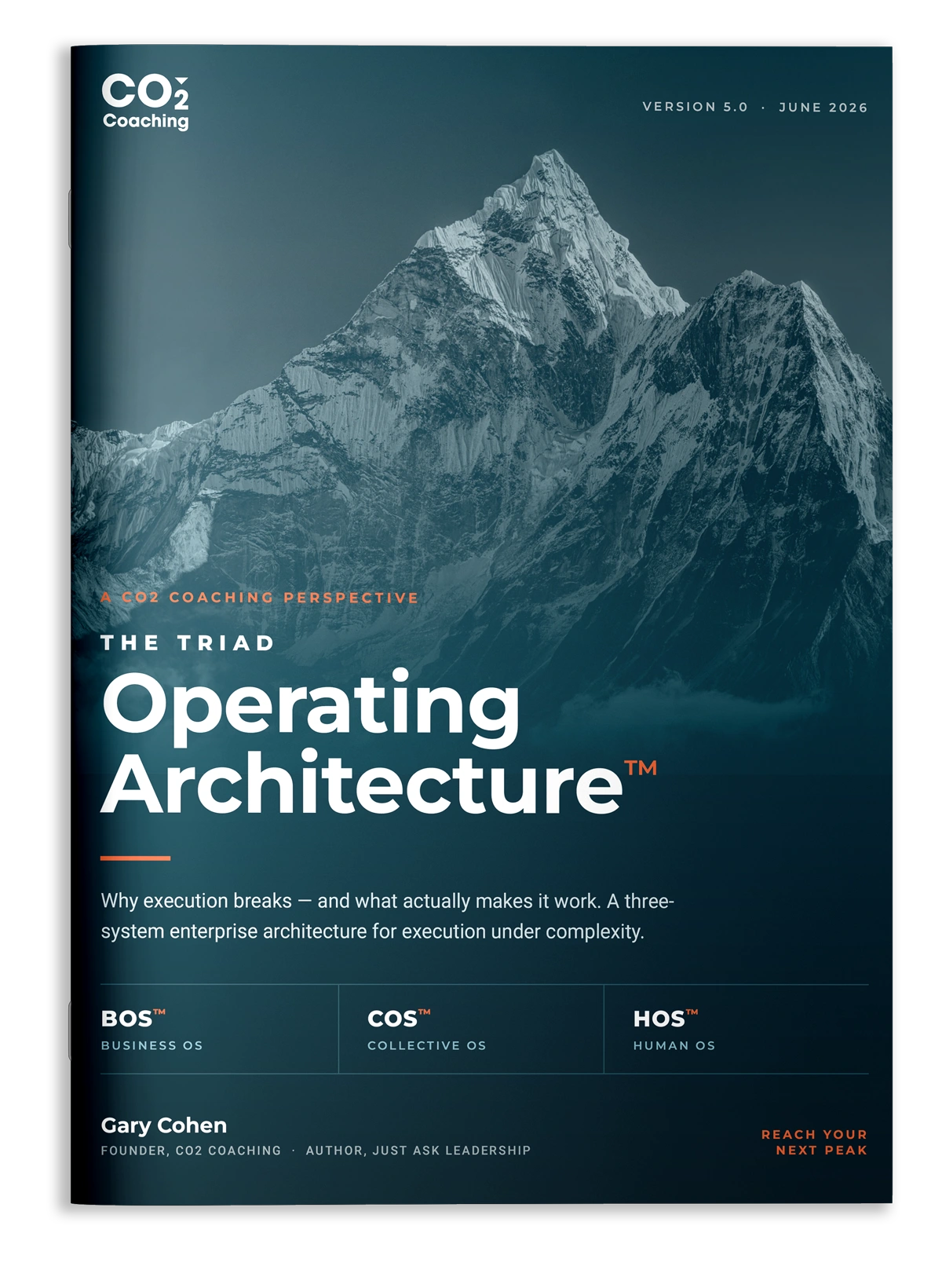
Get “The TRIAD Operating Architecture” and Learn What Actually Makes Execution Work
What You'll Learn
When decisions keep resurfacing, accountability slips, or execution requires constant leader intervention, the instinct is often to add more process, more meetings, or more oversight. But more effort doesn’t help when the problem lives somewhere else.
The TRIAD Operating Architecture™ gives leaders a practical way to diagnose whether an execution issue belongs in the Business Operating System, Collective Operating System, or Human Operating System — and solve it where it actually lives.

Identify whether an execution problem is rooted in authority, commitment, or leadership capacity.

Understand how BOS, COS, and HOS work together to turn decisions into durable results.

Recognize when your organization is compensating for one weak system by overloading another.
What's Inside?
Understand the three operating systems behind execution: BOS™, COS™, and HOS™
Learn the one rule that makes the model usable: no system should solve problems that belong to another
Use three diagnostic questions to locate the real source of an execution problem before intervening
Recognize the substitution trap that creates more meetings, escalation, structure, and leader intervention without solving the issue
Identify five recurring patterns that weaken execution, including Leader-as-Integrator, Weak Peer Accountability, and the Hero Pattern
From Gary Cohen
author of Just Ask Leadership
In The TRIAD Operating Architecture™, Gary Cohen offers senior leaders a practical framework for understanding why execution can feel disproportionately difficult even when the strategy is sound and the people are capable.
By separating the work of business architecture, collective coordination, and human capacity, the TRIAD helps leaders move beyond treating every problem with the same familiar solution and start diagnosing what the organization actually needs.
The goal isn’t to add more process. It’s to solve the right problem in the right system.