

Operator to Architect
During a recent appearance on the Consulting Leaders Podcast, CO2 Co-Founder and Managing Partner Gary B. Cohen shared a challenge he sees repeatedly among founders, CEOs, and leadership teams.
Ironically, it often starts with success.
The business is growing. Revenue is increasing. Customers are happy. The leader is deeply involved and highly capable. They know the business inside and out, make sound decisions, solve problems quickly, and have become the person everyone relies on when something important needs attention.
From the outside, this can look like strong leadership.
But over time, a pattern begins to emerge. Questions flow upward. Decisions wait for approval. Teams hesitate to move forward without input. Problems repeatedly find their way back to the same person.
Eventually, the leader who helped build the organization becomes the bottleneck preventing it from growing further.
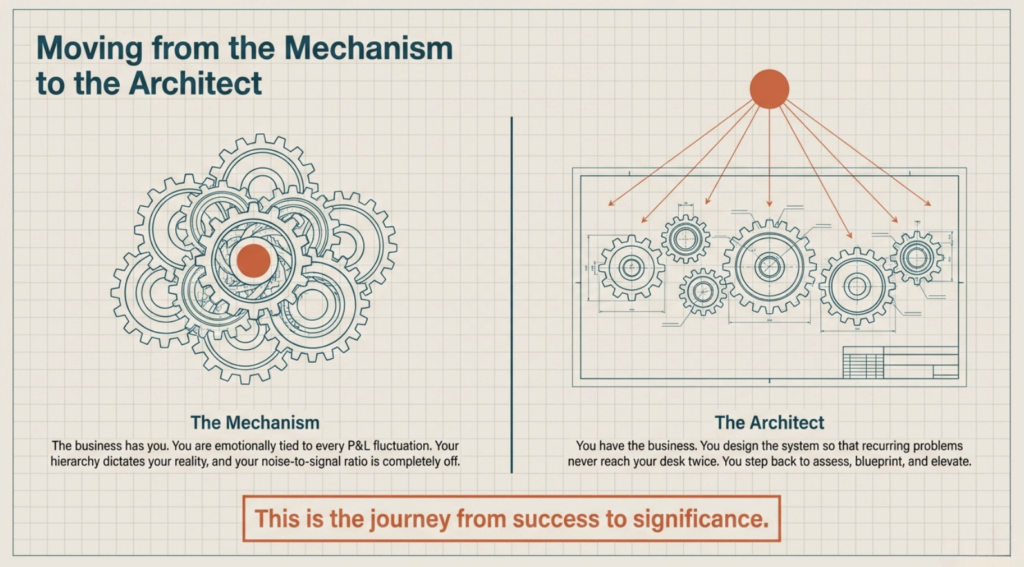
According to Gary, this happens because many leaders unknowingly become the mechanism of the business instead of the architect of it.
The challenge isn’t a lack of effort. In fact, most leaders caught in this cycle are working harder than ever. The challenge is that they’re spending their time solving today’s problems rather than building the systems, accountability, and leadership capacity that prevent those same problems from returning tomorrow.
The next stage of leadership requires a different mindset.
Not simply doing more.
Designing more.
What It Means to Be the Architect
Architects and operators both serve important functions within an organization.
Operators keep things moving. They solve issues, make decisions, and execute against priorities. Especially in the early stages of growth, those skills are essential.
But as a business scales, leadership requires something more.
Architects focus on designing the environment in which execution happens. They think about systems, decision rights, accountability, communication, and leadership development. Rather than asking, “How do I solve this?” they begin asking a different set of questions:
- Why does this issue keep coming back?
- What capability needs to be developed?
- What system is missing?
- What decision should no longer require my involvement?
That shift changes everything.
Instead of solving individual problems, leaders begin building organizations that can solve problems. Instead of becoming more necessary as the business grows, they create the conditions for others to step up, take ownership, and lead.
The goal isn’t to remove yourself from the business. It’s to stop being the only reason it works.
Why Good Leaders Accidentally Create Dependency
One of the most compelling concepts Gary discussed involves accountability and ownership.
Many leaders genuinely want to empower their teams. Yet in practice, they often undermine accountability without realizing it.
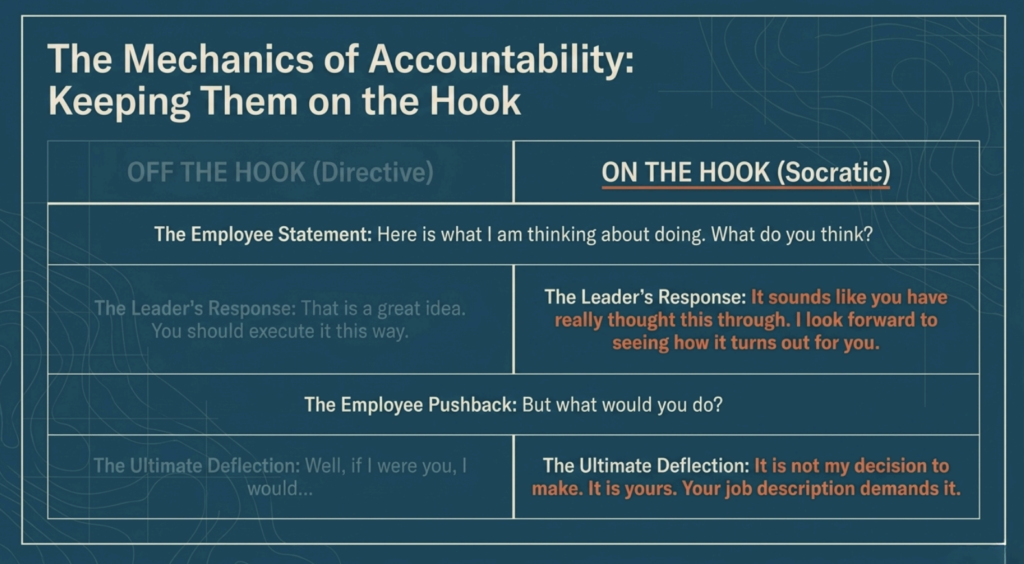
An employee walks into the office with an idea, a recommendation, or a plan. The leader listens, likes what they hear, and immediately offers approval, validation, or advice.
While that response feels supportive, something subtle has happened.
Ownership has shifted.
Gary refers to this dynamic as taking someone “off the hook.”
Once leadership endorses a decision, accountability becomes shared. If the initiative succeeds, the employee may feel they simply executed leadership’s recommendation. If it fails, responsibility can easily drift upward.
The result is a culture where employees seek permission instead of ownership.
Architects approach these moments differently.
Rather than rushing to provide answers, they ask questions. They challenge assumptions. They encourage deeper thinking. Most importantly, they leave responsibility with the person closest to the decision.
That doesn’t mean withholding support. It means helping people develop the confidence and capability to own both the decision and the outcome.
Because accountability isn’t something leaders can force. It’s something they create space for.
Why Questions Are More Powerful Than Answers
This belief sits at the heart of Gary’s leadership philosophy and became the foundation of his book, Just Ask Leadership.
Early in his career, questions helped him gather information. As his organizations grew, he discovered a more powerful purpose.
Questions create engagement.
Many leaders build their careers by being the smartest person in the room. They’re rewarded for having answers. They’re promoted because they can solve difficult problems.
But as leadership responsibilities expand, constantly providing answers can become a liability.
When leaders always provide the solution, they become the source of solutions.
When leaders ask thoughtful questions, they develop problem-solvers.
The distinction may seem small, but the long-term impact is significant. One approach creates dependency. The other develops capability, ownership, and critical thinking throughout the organization.
Great leaders understand that their value is no longer measured by how many answers they have. It’s measured by how effectively they help others think.
Walking the Ridgeline Between Humility and Ego

Making the shift from operator to architect requires more than better systems or stronger delegation skills. It requires self-awareness.
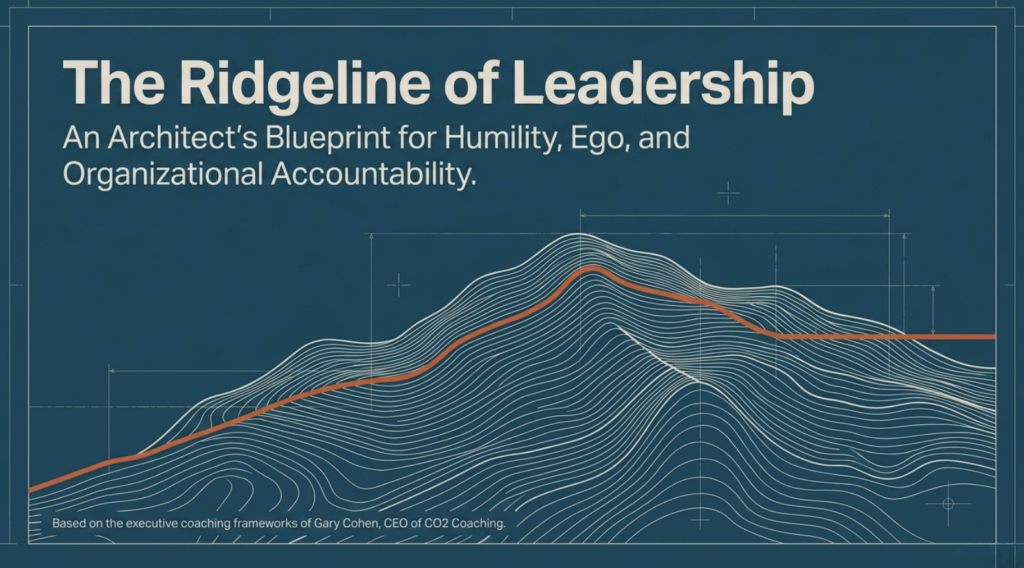
Gary often describes leadership as walking a ridgeline between humility and ego.
Leaders need enough confidence to make difficult decisions, cast vision, and navigate uncertainty. At the same time, they need enough humility to remain curious, seek input, and recognize that they don’t have all the answers.
Too much humility can create hesitation and self-doubt. Too much ego can create blind spots and an unwillingness to listen.
Neither creates effective leadership.
The strongest leaders learn how to balance both. They possess the confidence to lead while maintaining the humility to learn. They challenge others while remaining open to being challenged themselves.
In many ways, that balance is what allows leaders to move from directing people toward developing them.
The Problem Might Not Be Where You Think It Is
Another key insight from the conversation centered on how organizations diagnose problems.
When performance stalls or accountability weakens, leaders often respond by adding more structure. Another meeting. Another process. Another layer of oversight.
Sometimes that works.
Often it doesn’t.
According to Gary, organizations operate through three interconnected systems: the business operating system, the human operating system, and the collective operating system.
The business operating system includes strategy, processes, decision-making structures, and accountability mechanisms. The human operating system focuses on individual behaviors, motivations, and personal growth.
But many leadership challenges emerge from the collective operating system—the space between people.
It’s where trust is built or broken. Where commitments are made or missed. Where difficult conversations either happen or get avoided.
When leaders misdiagnose which system is creating the problem, they often implement solutions that don’t stick. More oversight may temporarily improve compliance, but it won’t resolve a breakdown in trust. A new process won’t fix a team that avoids accountability conversations.
Architects learn to identify where the problem truly lives before deciding how to solve it.
The Future of Leadership Isn’t More Control
The conversation concluded with a discussion about AI and its growing role in leadership development and executive coaching.
Gary sees enormous potential in AI’s ability to identify patterns, summarize information, surface blind spots, and accelerate insight. At CO2, AI is already helping coaches and leaders uncover trends that might otherwise go unnoticed.
But he also believes there are limits to what technology can do.
- AI can provide information. It cannot build trust.
- AI can identify patterns. It cannot create accountability.
- AI can offer recommendations. It cannot develop relationships or navigate the complexities of human behavior.
Those responsibilities still belong to leaders.
As organizations continue to evolve, the leaders who thrive won’t necessarily be the ones with the most answers or the fastest access to information. They’ll be the ones who create environments where people can think, decide, collaborate, and take ownership without constant intervention.
In other words, they’ll be the leaders who successfully make the shift from operator to architect.
Want to hear the full conversation? Watch Gary’s appearance on the Consulting Leaders Podcast for additional insights on leadership, accountability, and organizational growth.